What a mesh number means
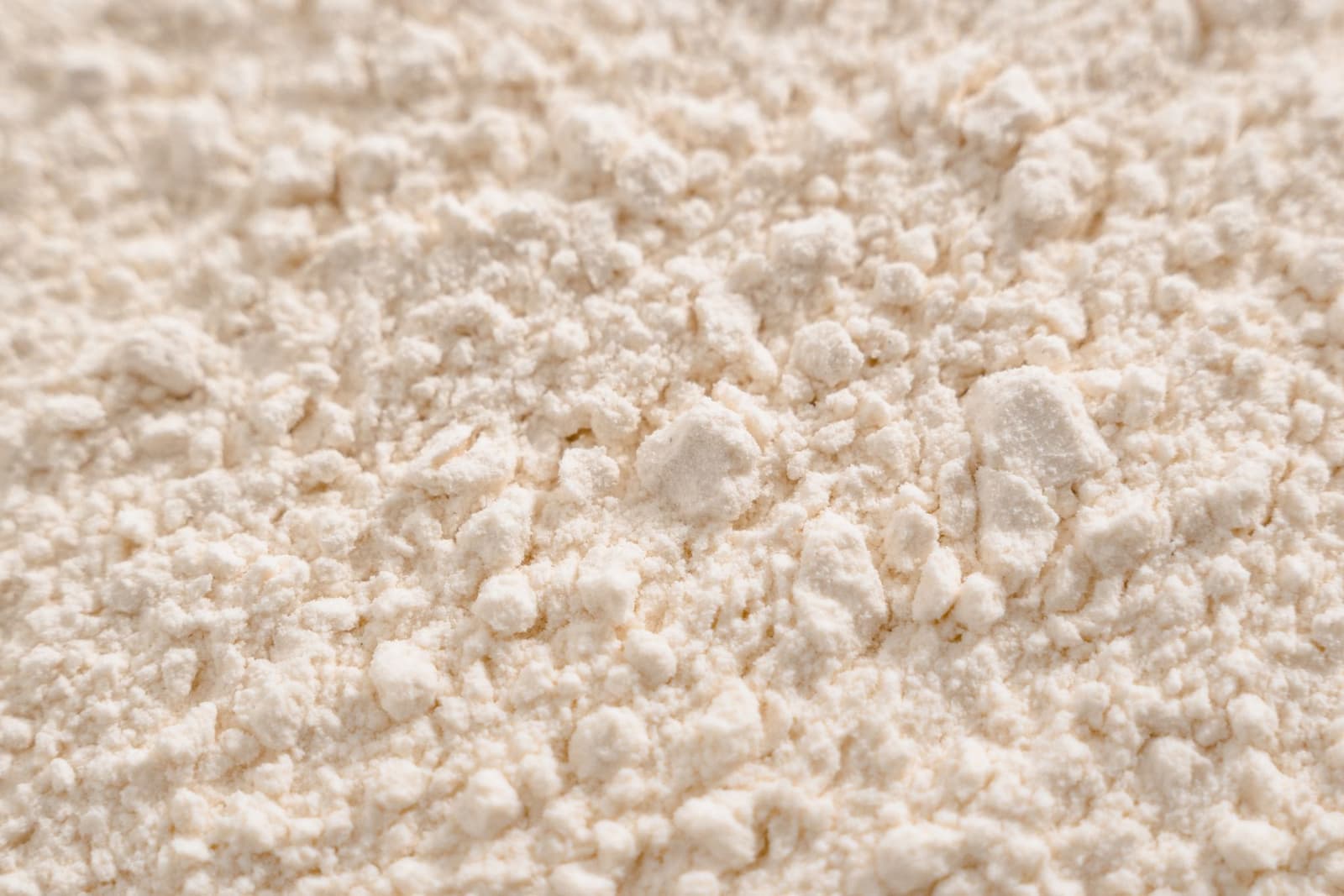
Mesh describes the sieve through which the milled gelatin passes, so a higher number indicates a finer particle. The figure is a distribution rather than a single size: a grade quoted at 30 mesh contains a spread of particles around that point. Understanding the spread matters more than the headline number, because it is the fine tail that governs how the material behaves on first contact with water.
Fine particles dissolve faster and lump sooner
Smaller particles present more surface area, so they hydrate quickly — which is exactly why they clump. The outer particles of a poured heap swell and form a gel skin that seals the dry powder inside, producing the familiar lump that survives extended stirring. Coarser grades wet more slowly and disperse more forgivingly, at the cost of a longer hold before the solution is clear.
Match the mesh to the addition method
High-shear mixers and vacuum systems handle fine grades well because the powder is dispersed before it can agglomerate. Manual addition into an open vessel, or dosing into a liquid already carrying sugar or salt, is far safer with a coarser mesh. The correct particle size is a property of your addition equipment as much as of the gelatin, which is why a grade that works at one site can fail at another.
Cold-water dispersion changes the calculation
Where gelatin must be dispersed cold and hydrated before heating, coarse grades are usually preferred: the slower wetting gives the particles time to separate in the vessel. Where the process allows direct addition into warm water under shear, finer grades shorten the dissolution step and reduce total heat exposure — which protects gel strength in heat-sensitive formulations.
Watch for fines in transit and storage
Particle distribution is not fixed once it leaves the mill. Vibration during transport and handling generates fines and segregates the material within the bag, so the top of a sack can behave differently from the bottom. Consistent results depend on how the material is decanted as well as on the specification, and it is worth confirming that receiving practice does not undo a carefully chosen mesh.
Trial the mesh, do not assume it
Run the candidate grade through your own addition sequence at production scale before committing, timing dissolution and inspecting for undispersed material. Record the hold time required to reach a clear solution and treat that figure as part of the grade's specification. A mesh chosen against measured behaviour on your equipment removes a whole class of intermittent batch problems.
Run the candidate grade through your own addition sequence at production scale before committing, timing dissolution and inspecting for undispersed material. Record the hold time required to reach a clear solution and treat that figure as part of the grade's specification. A mesh chosen against measured behaviour on your equipment removes a whole class of intermittent batch problems.